Why Now Is the Time to Start Planning Your iMIS EMS Upgrade
By Bursting Silver · Industry Report
If you’re still running iMIS 2017, you’ve probably told yourself some version of the same thing: it still works, so an upgrade can wait.
That’s a reasonable instinct. Nobody wants to take on a big project before they have to. But the math on “wait” has changed, and the cost of waiting is no longer zero. In our last article we walked through how to tell if your system is ready for the cloud.
This one answers the next question we hear most often: why start now?

The Clock Is The Reason
A few hard dates are closing in on iMIS 2017 environments, and they aren’t moving.
iMIS 2017 reaches end-of-life in September 2026. After that, the platform shifts to maintenance mode. You’ll still get security patches, but no new features and no further development. Every month you stay puts more distance between your system and the modern platform your peers are running.
The Microsoft stack underneath iMIS 2017 is aging out at the same time. SQL Server 2016 stops receiving security updates in July 2026. Windows Server 2016 reaches end-of-support in January 2027. Windows 10, still on plenty of staff machines, stopped getting updates in October 2025. Running your organization on unsupported servers and databases isn’t just inconvenient. It creates real security and compliance exposure, and it’s the kind of thing an auditor will eventually ask about.
None of these deadlines mean you have to finish an upgrade tomorrow. They do mean the window to plan one calmly is open right now, and it won’t stay open forever.
“Now” Means Planning, Not Panicking
This is the part organizations most often get backwards. Starting now doesn’t mean starting the migration this quarter. It means starting the plan.
A well-run EMS upgrade is rarely a single leap. For most iMIS 2017 clients the path runs through a staged step that lets you move to the latest version while you retire custom code and reports over time, rather than all at once. That staging is what keeps the project manageable. But it only works if you give yourself runway. The organizations that struggle are the ones that wait until a server fails or a deadline lands, then try to compress a year of decisions into a few stressful weeks.
Planning early also protects you from a quieter problem: capacity. There are only so many experienced hands qualified to do these migrations, and as the end-of-life date approaches, more clients will be reaching for the same calendar slots. Booking your planning conversation now is how you stay ahead of that crunch instead of behind it.
Answering The Hesitations Head-On
If you’ve held off, it’s usually for one of three reasons. Each has a straightforward answer.
“It will be disruptive.”
The staged path exists precisely to keep day-to-day operations running while you modernize in the background. Planning ahead is what turns a disruption into a schedule.
“We’re not sure it’s worth the cost.”
Fair question. What’s easy to miss is that staying on 2017 isn’t free either. You’re already paying in staff hours lost to manual work and in the risk of running on unsupported servers. Because the upgrade happens in stages, you can spread the cost out instead of facing one big bill, and a short conversation is the quickest way to see what it looks like for your setup.
“We don’t know where to start.”
Start with a clear roadmap. Our EMS Upgrade Playbook lays out the full path from 2017 to the cloud, step by step, so you can see the whole project before you commit to it.

The Takeaway
Staying on iMIS 2017 feels like the low-risk choice. With the deadlines now in view, it’s quietly becoming the higher-risk one.
The good news: you’re early enough to do this on your own terms, with time to plan and budget before anything is forced.
The best first step is also the smallest one: a conversation.
We’ve guided many organizations through this exact transition, and we’ll help you map a path that fits your system, your budget, and your timeline.
The window is open. Now is the time to start planning.
Start the conversation today
We’ve helped membership organizations across North America plan and run EMS upgrades on their own terms, so their teams can get back to serving members instead of working around outdated tools. A short call is the easiest way to see what that looks like for you.
Looking for Some Clear Next Steps?
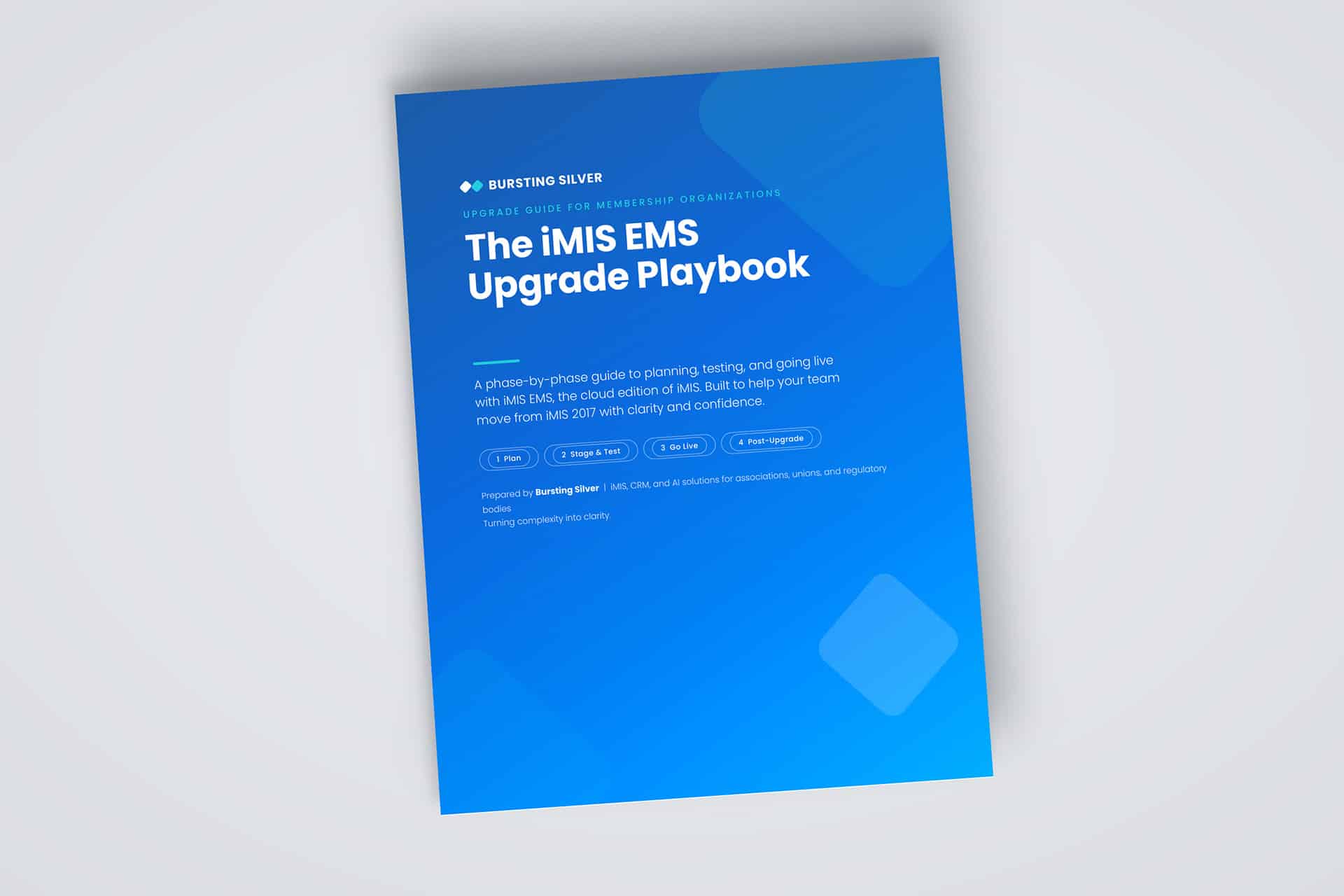
There’s a lot involved in an EMS upgrade, which means plenty of places to get caught out if you go in without a map. That’s why we put together the iMIS EMS Upgrade Playbook: a 14-page guide that walks through the whole process in a clear, easy-to-follow, 4-phase approach. Get your free copy and work through the checklist with your team, so you can plan the upgrade with your eyes open.
The Association Leader’s Guide to Navigating Digital Transformation Challenges
Digital transformation is no longer a future priority for associations, it’s a present-day necessity.

AI Readiness Checklist for Membership Organizations
Trying to keep up with what’s new in AI can be overwhelming, but here’s what we are learning to help customers stay updated.

Artificial Intelligence and iMIS: What’s New in 2026?
Trying to keep up with what’s new in AI can be overwhelming, but here’s what we are learning to help customers stay updated.